Need Help?
Have an emergency? We offer emergency call out & repair

Have an emergency? We offer emergency call out & repair
Commercial roof installers need to understand more than how to cover a building in sheets of metal. Warehouses, workshops and industrial facilities each have their own structure and access requirements; and that’s before considering extraneous bits like weather exposure. The roof must protect people, stock and equipment without avoidable disruption.
Steel is often central to that conversation, but a good commercial roof installation begins with the building itself and reliable commercial roof installers.
Commercial roofing should be planned around the building’s structure, use and condition. Steel suits many industrial properties, while flat systems may suit offices, extensions and low-pitched sections. Commercial roof installers should therefore be able to advise you on the best practices from the start of your project to the conclusion.
A commercial roof is not simply a larger domestic roof. The spans are often wider, drainage routes longer and the number of penetrations greater. Rooflights, vents, extraction systems and plant can all interrupt the covering and introduce vulnerable junctions.
Above machinery, stock or a production floor, roofing problems can become operational problems very quickly.
Before recommending a system, commercial roof installers should consider:
Steel roofing is widely used on warehouses, workshops and manufacturing facilities. Profiled sheets cover large areas efficiently, while coatings and insulation arrangements allow the system to be adapted.
Metal roofing includes several sheet, panel and standing-seam formats. In a commercial setting, the exact profile matters because it affects drainage, fixings and compatibility with the supporting frame.
Steel roof installers and commercial roof installers generally should look beyond the visible sheet. The complete system may include insulation, liners, vapour control layers, flashings, gutters, rooflights and wall cladding.
| Roofing system | Often suited to | Important considerations |
| Single-skin steel sheets | Unheated storage buildings | Condensation and internal conditions |
| Steel sheets with insulation | Warehouses and occupied buildings | Insulation and vapour control |
| Composite panels | Projects needing integrated insulation | Joint detailing and specification |
| Flat roofing systems | Offices and low-pitched areas | Falls, outlets and standing water |
| Refurbishment or overcladding | Structurally suitable ageing roofs | Additional weight and hidden moisture |
The Metal Cladding and Roofing Manufacturers Association guidance library offers further technical information on metal roofing and cladding systems.
Not every ageing commercial roof needs immediate replacement, but repeated patch repairs are not always sensible.
A proper inspection should establish whether the problem is isolated or linked to the wider roof design. Damaged fixings, failed laps, corroded sheets, split membranes and blocked drainage may all present as a leak, but they do not require the same response.
A practical decision usually falls into one of three routes:
Juniper Roofing Southern provides commercial roof inspections to identify the cause before recommending the scope of work. Our guide to industrial roof leak repair and reroofing also explains when broader replacement may be more practical.
Commercial roofing work must be organised around deliveries, staff, vehicles and production. Internal areas may need protecting and disruptive stages carefully scheduled.
Safe access is equally important. The Health and Safety Executive provides specific guidance on health and safety in roof work. Fragile rooflights, unprotected edges and ageing sheets all need to be considered before work begins.
Clear planning from any commercial roof installers should establish:
A high-quality installation includes both the finished roof and how the work was managed.
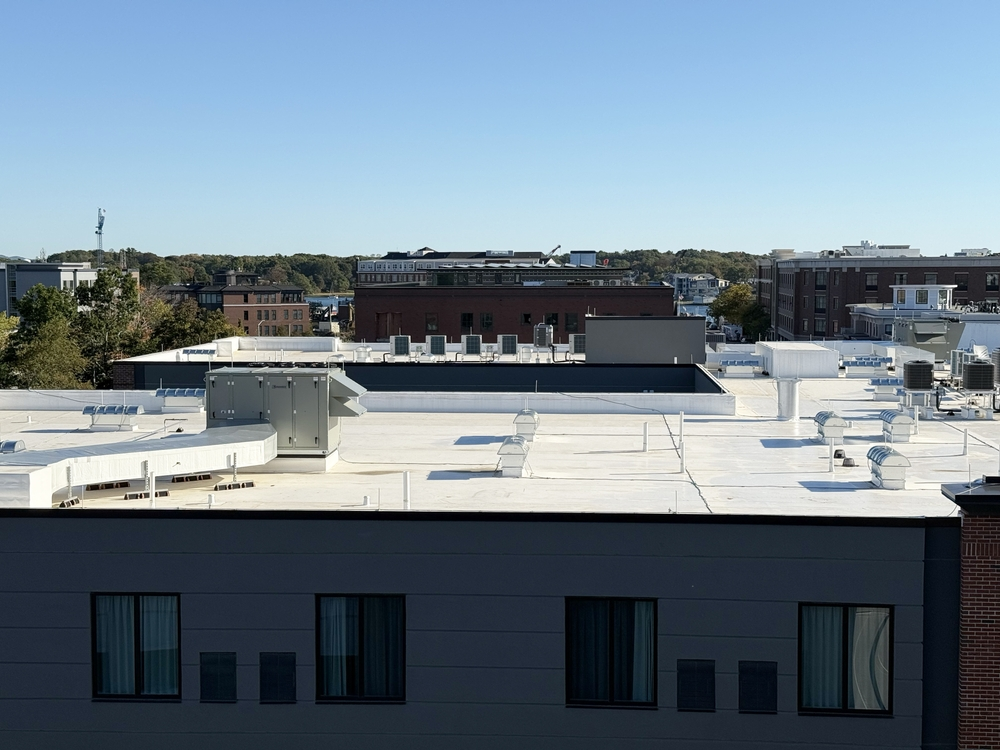
Some properties combine pitched steel areas with flat sections over offices, loading bays or extensions.
A pitched roof can encourage efficient water run-off, but its performance still depends on suitable laps, flashings and gutters. A flat roof relies on correctly formed falls and unobstructed outlets. Now, neither is automatically better than the other. Really, the right choice depends on the structure, roof geometry and use of the building. It’s easier to install and maintain a pitched roof when you’re dealing with cost-effective steel sheets on a warehouse, for example.
Experienced metal roofing contractors and commercial roof installers should discuss more than steel alone. Commercial properties often need several materials and details to work as one weatherproof envelope.
At Juniper Roofing Southern, we begin by understanding the building, the roofing problems and the way the site operates. Our roofing services cover inspections, roof repair, steel roof installation, flat roofing and wider reroofing work for commercial and industrial properties.
Whether you need steel roof installers for a warehouse or commercial roof installers to assess an existing system, the starting point should be a clear inspection and an honest explanation of the available options.
Contact Juniper Roofing Southern to discuss your commercial roof installation.
???? https://juniperroofingsouthern.co.uk/
???? 01323 810 555
If you liked this, you may also like: Things to Consider When Seeking Warehouse Roof Repairs
The timescale depends on the size of the building, the roofing system and how much preparation is required. A straightforward steel roof installation may take a few weeks, while larger or more complex projects can take considerably longer.
In some cases, yes. Commercial roof installers can phase the work around staff, deliveries and production, although certain areas may need to be temporarily restricted for safety.
Most commercial roofs should be inspected at least once a year and after particularly severe weather, preferably by experts such as commercial roof installers. Regular inspections help identify loose fixings, damaged sheets, blocked drainage and minor leaks before they become more disruptive.
An uninsulated steel roof can be noticeably louder during heavy rain. Modern commercial roofing systems often include insulation and internal liners, which significantly reduce noise inside the building.
Yes, many steel roofing systems can support solar panels when the structure and roof condition are suitable. The fixings must be designed carefully to avoid damaging the roof covering or creating weak points where water could enter
Condensation develops when warm, moisture-filled air meets a colder roof surface. Insulation, ventilation and correctly fitted vapour control layers can all help manage the risk.
Individual sheets can sometimes be replaced by commercial roof installers if the damage is isolated and suitable matching materials are available. The surrounding fixings, laps and supporting structure should also be checked to make sure the problem is not more widespread.
Steel roofs generally require relatively little maintenance, but gutters, rooflights, fixings, seals and sheet joints should still be inspected regularly by commercial roof installers. Dirt, leaves and standing water should also be cleared before they contribute to corrosion or drainage problems.
Standard roofing sheets mainly provide the external weatherproof covering. Composite panels combine the external sheet, insulation and internal liner within one manufactured panel, making them useful for insulated commercial buildings.
Yes, roof sheets and wall cladding are often replaced as part of the same project. Completing both together can provide a more consistent appearance and make it easier to coordinate flashings, gutters and junctions between the roof and walls.
Updated August 2026


Registered address: 31 Willingdon Road, Eastbourne, East Sussex BN21 1TN. Company Registration Number: 15706433.
VAT Registration number: 502034161