Need Help?
Have an emergency? We offer emergency call out & repair

Have an emergency? We offer emergency call out & repair
Understanding the flue pipe and chimney flue is essential for any homeowner using (or maintaining) a wood-burning or multi-fuel fireplace. Whether you’re lighting a cosy fire or simply preserving your roof’s structure, your chimney system does far more than just send smoke into the sky.
If you’ve ever asked “what’s actually inside my chimney?” this blog explains exactly that, in simple terms!
These two terms are often used interchangeably, but there’s a real difference, especially when it comes to maintenance, heat output, and safety.
A flue pipe is the internal duct that carries smoke and gases out of your appliance. It can be rigid or flexible, metal or clay, depending on age and system type.
A chimney flue refers to the vertical passage inside the chimney stack that houses the flue pipe. In older homes, the flue might be unlined masonry; in modern homes, it’s typically lined.
Put simply: the flue pipe is the working part; the chimney flue is the space it runs through.
Here’s a breakdown of the typical components found in most chimney systems:
| Component | What It Does | Common Issues |
| Flue Liner | Lines the inside of the chimney flue | Cracking, corrosion, poor draw |
| Stove Flue Pipe | Connects stove to chimney flue | Loose joints, carbon leaks |
| Chimney Stack | Visible part above the roof | Brick decay, leaning, loose mortar |
| Chimney Cap / Pot | Terminates chimney, controls smoke flow | Cracks, bird nesting, poor ventilation |
| Twin Wall System | Insulated flue pipe system (external) | Incorrect fit, overheating risk |
| Register Plate | Seals chimney opening above appliance | Warping, soot leaks |
Each part plays a role in ensuring your fire burns cleanly, your roof stays safe, and your home doesn’t fill with smoke.
If you’ve recently installed a wood burning or multi-fuel stove, chances are you’ve been told you need a flue liner, and with good reason.
Modern building regulations usually require flue liners for any active stove or fire, especially if the chimney was built before 1965.
Unlike traditional brick chimneys, twin wall flue systems are often used when a new stove is installed in a location without a chimney (e.g. a kitchen extension or conservatory).
It’s a double-skinned, insulated flue pipe system that vents vertically through the ceiling or wall. Twin wall systems require expert installation to meet building regulations, and any mistake can lead to poor performance or fire risk.
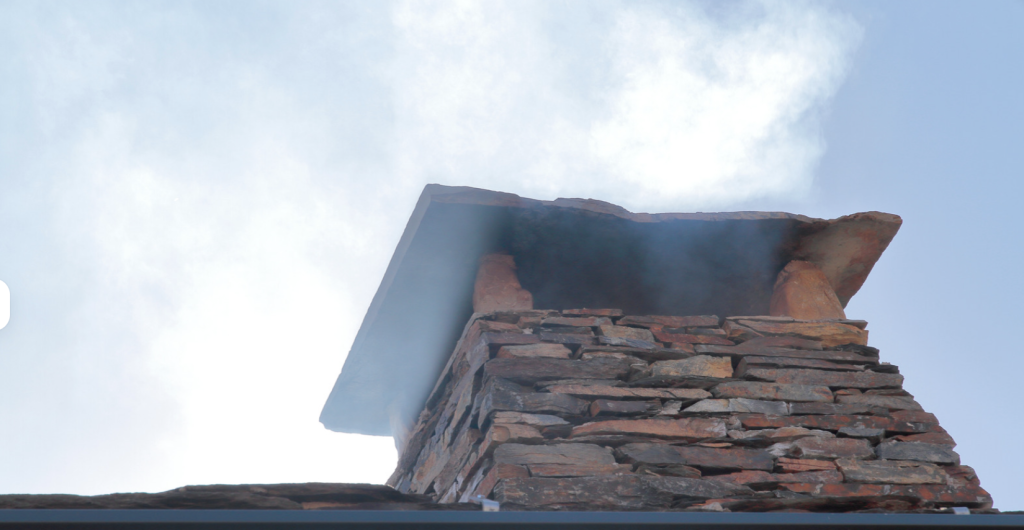
If your fire doesn’t “draw” properly, you smell smoke indoors, or there’s staining around the chimney breast, something’s wrong with the system. Here’s how to tell what’s needed:
Some homeowners even choose to remove the chimney stack entirely (if the flue is unused), but this must be done with proper support and care for the roof structure.
Ignoring your chimney can affect much more than smoke control.
At Juniper Roofing Southern, we see many chimney issues that start small but escalate when left unchecked, especially after winter storms or long-term use of wood burners.
We specialise in chimney repairs, rebuilds, and flue upgrades for homes across Sussex. Whether you need a stove flue pipe checked or a chimney flue re-lined for compliance, we offer:
We’ll explain the condition of your system clearly, and only recommend what’s needed for safety, efficiency and long-term value.
If you’re using a wood burner, have an older chimney, or just don’t know what condition your flue is in, now’s the time to act. A healthy flue pipe and chimney system protect your fire, your roof, and your home.
Explore our Chimney Services or call 01323 810 555 to book an inspection or get your free quote.
Looking for another great read? Check out our Flat Roof Repair blog!
A flue pipe is the duct or pipe that carries smoke and gases from your stove or fireplace up through the chimney and out of your home. It’s usually made from metal and may be insulated, flexible, or rigid depending on the system.
Not quite. The flue pipe is the actual pipe that carries smoke, while the chimney flue is the passage or channel inside the chimney that the pipe runs through. Some older chimneys don’t have a pipe and just rely on the masonry flue.
Yes, a flue liner is strongly recommended for all wood burning and multi-fuel appliances. It improves safety, efficiency, and ensures your installation meets current UK building regulations.
Common signs include smoke escaping indoors, poor draft, black staining on the chimney breast, or visible damage to the stove flue pipe or chimney flue. An inspection by a professional roofer or chimney specialist can confirm the issue.
Absolutely. We handle everything from flue pipe repairs and chimney sweeping to full system upgrades and chimney stack rebuilds. We’ll assess your needs, explain your options clearly, and offer a free no-obligation quote.


Registered address: 31 Willingdon Road, Eastbourne, East Sussex BN21 1TN. Company Registration Number: 15706433.
VAT Registration number: 502034161