Need Help?
Have an emergency? We offer emergency call out & repair

Have an emergency? We offer emergency call out & repair
Roofers in Sussex see a wide mix of roof types, exposure and property ages, which means the same visible problem can have very different causes from one home to the next. A missing tile near the coast, a damp patch below an older pitched roof, or ponding water on a flat roof may look simple from the ground, but the answer usually lies in how the roof was built, how it drains and how it responds to local conditions.
As local roofers, we spend a lot of time looking at why roofs behave the way they do. This blog helps homeowners understand the roof issues we see most often in Sussex.
Sussex roofs deal with coastal wind, rain, salt air, trees, older roof structures and changing property styles. A roof is not just tiles or felt; it is a full weathering system. When one part fails, the issue can spread into battens, underlay, insulation, walls and ceilings. Understanding how water, ventilation, materials and exposure work together helps homeowners spot problems earlier and make better repair decisions.
Sussex is not one single roofing environment. Homes near the coast often deal with stronger winds, saltier air and more exposed weathering. Rural properties may sit beneath overhanging trees, which can fill gutters, hold moisture and encourage moss. Older towns and villages often have clay, concrete or slate tile roofs that have been repaired, extended or altered over decades.
This is why a roofing company with local experience looks beyond the obvious defect. We look at roof pitch, surrounding trees, drainage, material age, flashing details and whether previous roofing work has solved the cause or just covered the symptom.
A roof works by moving water away from the building as reliably as possible. On a pitched roof, rain should travel down the roof covering, into the gutters and away through the drainage system.
A healthy roof usually relies on:
If one part becomes blocked, cracked, displaced or poorly fitted, the rest of the system has to work harder. That is when small faults can start showing inside the home as damp staining, mould or blown plaster.
| Roof Issue | Common Local Cause | Why It Matters |
| Moss build-up | Shade, trees and damp roof surfaces | Can slow drainage and block gutters |
| Loose tiles | Wind exposure or aged fixings | Allows rain to reach the underlay |
| Cracked mortar | Weathering, frost and movement | Affects ridges, verges and chimneys |
| Flat roof ponding | Poor falls or blocked outlets | Increases stress on the covering |
| Damp near a chimney | Failed flashing or porous brickwork | Can let water reach roof timbers |
These signs do not automatically mean the roof needs major work. In many cases, local roofers can carry out targeted roof repairs if the problem is caught early enough.
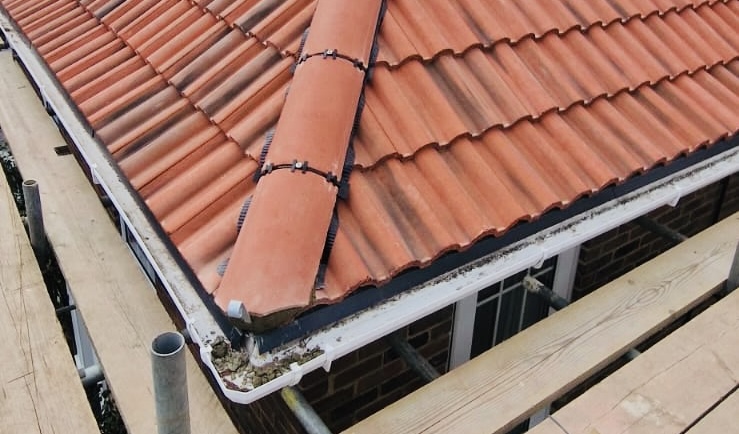
A coastal roof may suffer more from wind-lifted tiles, worn fixings and weathered metalwork. A rural roof may be affected by moss, leaf litter and branches. An older village property may have a pitched roof with historic repairs, uneven lines or traditional materials that need a more careful approach.
The material on the roof changes how it ages. Slate can perform well, but damaged or slipped slates need sympathetic repair. Concrete tiles are durable, but can still suffer from movement or cracking. Clay tiles have character, but older examples can become brittle.
We always want the repair method to suit the roof, not just the defect. Replacing a broken tile, reseating slipped slates, improving a flashing detail or clearing drainage may each solve a different issue.
You should never climb onto a roof to investigate it yourself, but there are useful checks you can make safely from the ground.
Repeated staining or damp after ordinary rainfall suggests the issue is becoming more consistent.
Unfortunately, roofing issues will not improve on their own. Water finds weak points, and once it gets beneath the main covering, it can move in ways that are not obvious from inside the house. A small tile issue can become damaged underlay. A blocked gutter can become a fascia or wall problem.
For us, good roofing starts with understanding the roof in front of us. Sussex properties are varied, from Brighton to Crawley, and the best answer is not always the biggest repair. It is the one that deals with the cause properly, suits the building and helps the roof keep doing its job.
If you liked this, you may also like: Storm Damage Roof Repair – A Roof Leak After Storm Weather
Roofers in Sussex need to understand a wide range of local roof conditions, from coastal wind exposure and salt air to older village properties, tree-lined roads and mixed roof materials. The right approach depends on the age, structure, pitch, materials and exposure of the property, not just the visible fault.
Sussex roofs can be exposed to strong winds, heavy rain, coastal air and changing seasonal temperatures. Over time, this can loosen tiles, wear down fixings, affect mortar, block drainage and expose weaker details around chimneys, valleys, verges and flat roof outlets.
Your roof may need repair if you notice missing tiles, slipped slates, overflowing gutters, damp patches, mould, staining near a chimney, loose mortar or daylight visible from inside the loft. These signs do not always mean major roofing work is needed, but they should be checked before water damage spreads.
Neither roof type is automatically better. A pitched roof is designed to shed rain quickly through its slope, while a flat roof relies on good falls, waterproofing and clear outlets. Both can perform well in Sussex when they are built, maintained and repaired correctly.
Moss grows where moisture lingers, especially on shaded roofs, properties near trees, older tiles and roof areas that dry slowly after rain. Moss can hold moisture against the roof surface and may also break away into gutters, valleys and outlets, creating drainage problems.
Yes. A small leak can travel beneath tiles, through underlay, along timbers and into ceilings before it becomes obvious indoors. Early roof repairs are usually more straightforward than waiting until water has affected insulation, plaster, timber or internal finishes.
Older Sussex properties often have traditional materials, older roof structures, previous repairs and details that need sympathetic handling. A repair should suit the roof’s age, material and construction, especially where slate tile, clay tile, chimneys or original rooflines are involved.
After strong wind or heavy rain, look from the ground for slipped tiles, broken tiles, leaning ridge tiles, overflowing gutters, debris in valleys and new damp patches indoors. You should also check your loft for damp smells, staining or visible daylight, but avoid climbing onto the roof yourself.
Gutters help move rainwater away from the roof and building. When they block or overflow, water can run onto fascias, walls, brickwork and roof edges. This can cause damp, rot, staining and unnecessary stress on parts of the roof that are not designed to hold standing water.
You should contact local roofers when you see repeated damp, missing tiles, slipped slates, blocked drainage, chimney staining, flat roof ponding or any roof change after bad weather. A proper inspection can identify whether the issue is minor, developing or likely to need more urgent attention.
Updated May 2026


Registered address: 31 Willingdon Road, Eastbourne, East Sussex BN21 1TN. Company Registration Number: 15706433.
VAT Registration number: 502034161