Need Help?
Have an emergency? We offer emergency call out & repair

Have an emergency? We offer emergency call out & repair
Roof maintenance is the real answer to “how to eliminate moss on roof”, because moss is rarely just a surface problem. In our experience, it usually shows up where moisture lingers, debris is left to build up, gutters are not flowing properly, or overhanging trees keep parts of the roof shaded for too long. Removing what you can see is only half of the job. The other half is dealing with the conditions that allowed it to take hold in the first place.
If moss is already on the roof, the safest route is careful removal, clearing the gutters and drainage points, checking for broken or loose tiles, and stopping the damp conditions that let it come back. High-pressure washing is not the answer. Good roof maintenance means treating the moss, inspecting the roof, and keeping up with regular maintenance so a small issue does not turn into water damage or a roof leak.
Moss thrives on roofs that stay damp for longer than they should. That is why it often appears on shaded slopes, on roofs with nearby trees, and on lower pitch areas where water runs away more slowly. Leaves, twigs and general debris also give moss a better base to settle into.
This matters because moss holds moisture against the roof covering. Once that happens, the roof can stay wetter for longer, drainage can slow down, and early signs of damage can be harder to spot.
A lot of homeowners think moss is just an appearance issue. Sometimes it starts that way, but it can move beyond that if it blocks valleys, gutters or the normal flow of rainwater. At that point, it becomes part of a wider roof maintenance problem rather than a simple roof cleaning task.
The warning signs we would look for include:
If moss has already formed, the answer is not to attack it with the harshest method possible. A sensible approach is slower, safer and far better for the roof.
Pressure washing sounds appealing because it looks fast, but it can do more harm than good. On many roofs it risks damaging tiles, forcing water into places it should not go, and shortening the working life of the roof covering. That is why we see proper moss removal as part of roofing services and roof repairs where needed, not as a rushed clean-up job.
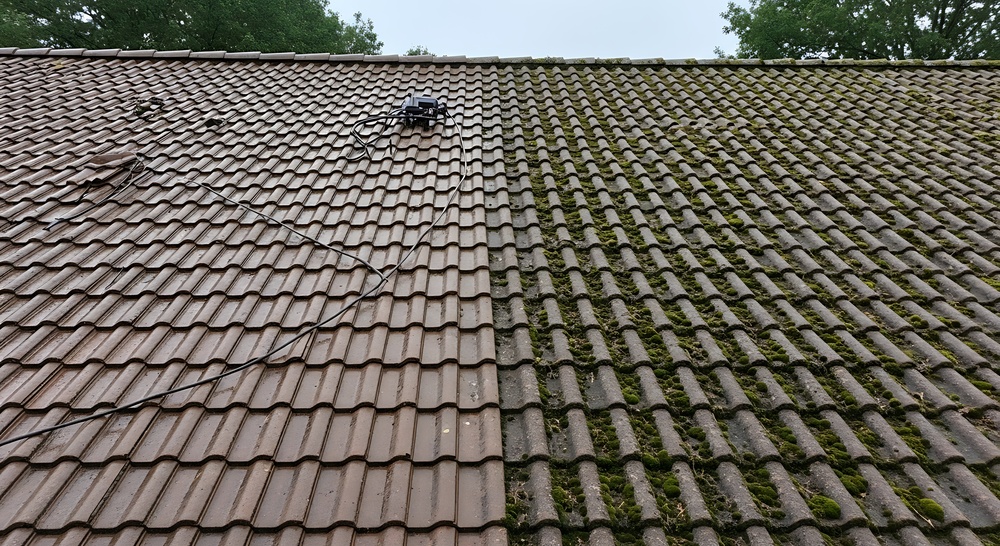
Different roofs need different care, and that is one reason a one-size-fits-all approach does not work.
| Type Of Roof | Common Moss Issue | Best Approach |
| Concrete Tile Roof | Rougher surfaces can hold dirt and moisture | Careful removal, treatment where needed, gutter clearance |
| Clay Tile Roof | Older tiles can be more delicate under foot | Gentle access, targeted checks, avoid aggressive cleaning |
| Slate Roof | Breakage risk increases with poor access | Controlled removal and close inspection |
| Lower Pitch Areas | Water drains away more slowly | More regular maintenance and drainage checks |
Long-term roof maintenance is what gives homeowners real peace of mind. Once the moss has been removed, the focus then shifts to prevention.
Regular maintenance does not have to mean constant work, but it does mean paying attention at the right times of year. We usually advise homeowners to think in terms of seasonal checks rather than waiting until there is visible water damage indoors.
A solid routine usually includes checking the roof in spring and autumn, clearing gutters, removing leaf build-up, trimming back overhanging trees, and keeping an eye out for fresh signs of damage after storms. In some cases, copper or zinc strips can also help limit regrowth over time.
At Juniper Roofing Southern, we look at moss as part of the bigger picture. The roof may need careful cleaning, but it may also need small roof repairs, better drainage, or a closer look at what shade and debris are doing over time. That is why good roof maintenance is worth taking seriously. It protects the covering itself, reduces the chance of a roof leak, and helps you deal with problems early while they are still manageable.
If you liked this, you may also like: Storm Damage Roof Repair, A Roof Leak After Storm Weather
Moss usually grows where a roof stays damp for longer than it should. Shaded slopes, nearby trees, blocked gutters and general debris all make it easier for moss to settle and spread.
Not always. Light moss growth can start as an appearance issue, but heavier build-up can hold moisture against the roof, slow drainage and contribute to blocked gutters or hidden roof damage over time.
The safest approach is usually careful manual removal, followed by clearing the gutters and checking the roof for broken or loose tiles. In some cases, a suitable treatment can then be applied to deal with remaining growth and help slow regrowth.
We would not recommend it. Pressure washing can damage tiles, strip protective surfaces and force water into places it should not go, which can create bigger problems than the moss itself.
It can contribute to problems if it is left for too long. Moss holds moisture on the roof surface, and that can increase wear, affect drainage and make it easier for small faults to go unnoticed.
The best way is through regular roof maintenance. Keeping gutters clear, trimming back overhanging trees, removing leaf build-up and checking the roof at the right times of year all help stop the damp conditions moss prefers.
For most homes, a check in spring and autumn is a sensible routine, with extra attention after heavy storms or periods of bad weather. Roofs surrounded by trees may need more frequent checks.
Yes. Roofs with rougher surfaces, lower pitches or shaded sections often hold moisture more easily, which makes moss more likely. The type of roof affects both how moss forms and how it should be removed safely.
It is worth calling a professional if the moss is widespread, keeps returning, is blocking gutters, or if you can already see slipped tiles, cracked tiles, damp patches or signs of a roof leak. That usually means the issue has gone beyond simple cleaning.
Yes, absolutely. Good roof maintenance is about catching problems early, before they become expensive roof repairs. Even when there is no visible leak, moss, blocked gutters and small signs of damage can still be building into a bigger issue.
Updated April 2026


Registered address: 31 Willingdon Road, Eastbourne, East Sussex BN21 1TN. Company Registration Number: 15706433.
VAT Registration number: 502034161