Need Help?
Have an emergency? We offer emergency call out & repair

Have an emergency? We offer emergency call out & repair
Commercial flat roof repair is rarely something a business can ignore for long. This guide explains how we assess leaks, failed details and ageing flat roofing systems on commercial properties, then decide whether repair or wider work makes sense.
At Juniper Roofing Southern, we work on commercial builds, industrial roofing and flat roofing systems where the priority is simple: find the cause, repair it properly and reduce the chance of the same issue returning.
Commercial flat roof repair should start with a proper inspection, not a rushed patch. Common issues include fixing leaks, failed joints, poor drainage, damaged coverings, cracked details and ageing flat roofing systems. For commercial properties, the best repair service should be safe, planned, cost effective and suitable for the scale of the building.
A domestic flat roof and a commercial flat roof may look similar from the ground, but they usually behave very differently.
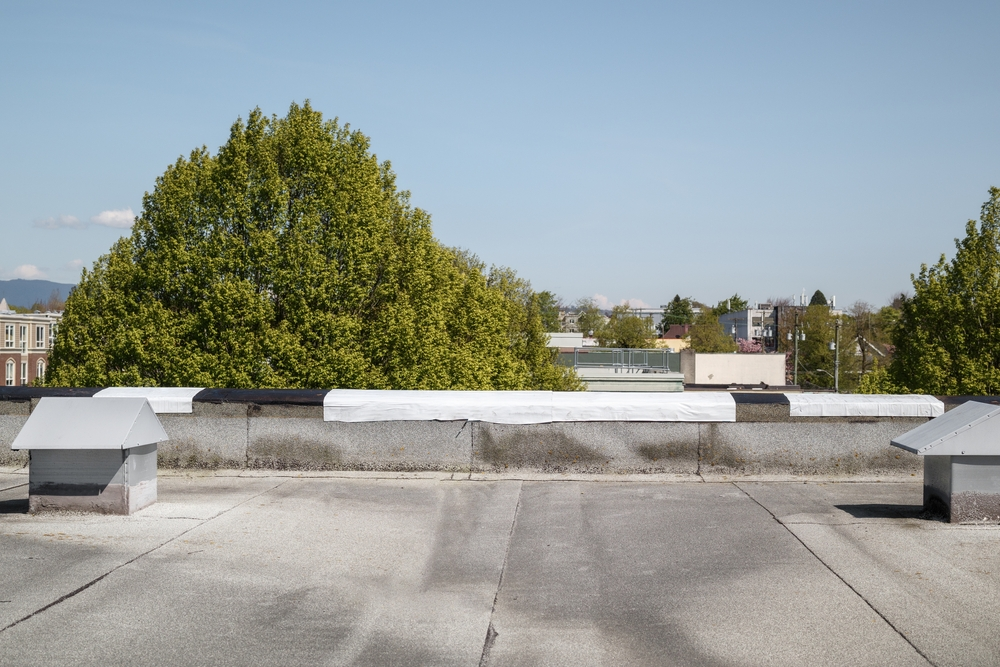
Commercial roofs are often larger, busier and more exposed. They may include rooflights, air conditioning units, plant equipment, service penetrations, edge details, walkways, drainage outlets and different roof levels. That means roof repairs need more than a quick look at the obvious wet patch inside the building.
On large scale commercial properties, the leak you can see inside is not always directly below the failure point. Water can travel underneath a covering, along insulation or around old seams before it appears internally.
Commercial flat roofs can fail for several reasons, and many problems build up slowly before they become obvious.
Common causes include:
In many cases, fixing leaks properly means understanding why the roof failed in the first place. If the repair only covers the visible hole, the same area may continue causing problems during heavy rain.
Good commercial roofing contractors should be able to explain what they are checking, why it matters and what options are available. Our process usually includes:
This gives the client a clearer picture of what is urgent, what can be monitored and what may need future budgeting.
Many commercial flat roof problems can be repaired without replacing the full roof. This is often the most cost effective route when the wider system is still sound.
A localised repair may be suitable where damage is limited to one area, such as a failed joint, cracked detail, small puncture or issue around an outlet. If the main system is dry and stable, targeted roof repairs can extend its service life and prevent avoidable disruption.
| Roof condition | Likely recommendation | Why it matters |
| One isolated leak | Localised repair | Keeps the fix proportionate |
| Several leaks | Wider investigation | There may be a system failure |
| Cracked or heavily aged covering | Larger repair or renewal | Surface failure may spread |
| Poor drainage or standing water | Drainage improvement plus repair | Repairs may not last |
| Failed details around plant or rooflights | Targeted detail repair | Details often fail first |
For commercial builds, the decision should be based on evidence rather than guesswork. A good contractor will not push unnecessary replacement, but they should also be honest when patching is unlikely to hold.
A commercial roof repair affects more than the roof itself. Access, safety, weather windows, staff disruption and the consequences of water entering a working building all need to be considered.
For businesses, roof repairs can affect offices, warehouses, stockrooms, workshops, retail areas and production spaces. In industrial roofing, leaks may affect machinery, storage, electrics or hygiene-sensitive areas.
Warning signs can include brown staining on ceilings, damp smells, watermarks after heavy rain, visible bubbling, cracking, lifting, blocked outlets, standing water, loose flashing or repeated leaks from the same general area.
Commercial flat roof repair should be practical, honest and based on what the roof actually needs. Some roofs need a straightforward repair. Some need staged improvement. Others need a more serious conversation about long term performance.
Juniper Roofing Southern provides roof repairs, flat roofing systems advice and commercial roofing support for businesses that need proper answers rather than temporary guesswork. Whether the issue is fixing leaks, assessing an ageing roof or planning repair work across larger commercial properties, our approach is built around clear inspection, safe working and durable results.
If your commercial flat roof is showing signs of damage, it is worth dealing with it before the problem spreads into the building below.
If you liked this, you may also like: Flat Roof Waterproofing: Torch On Felt Vs Single Ply Membrane
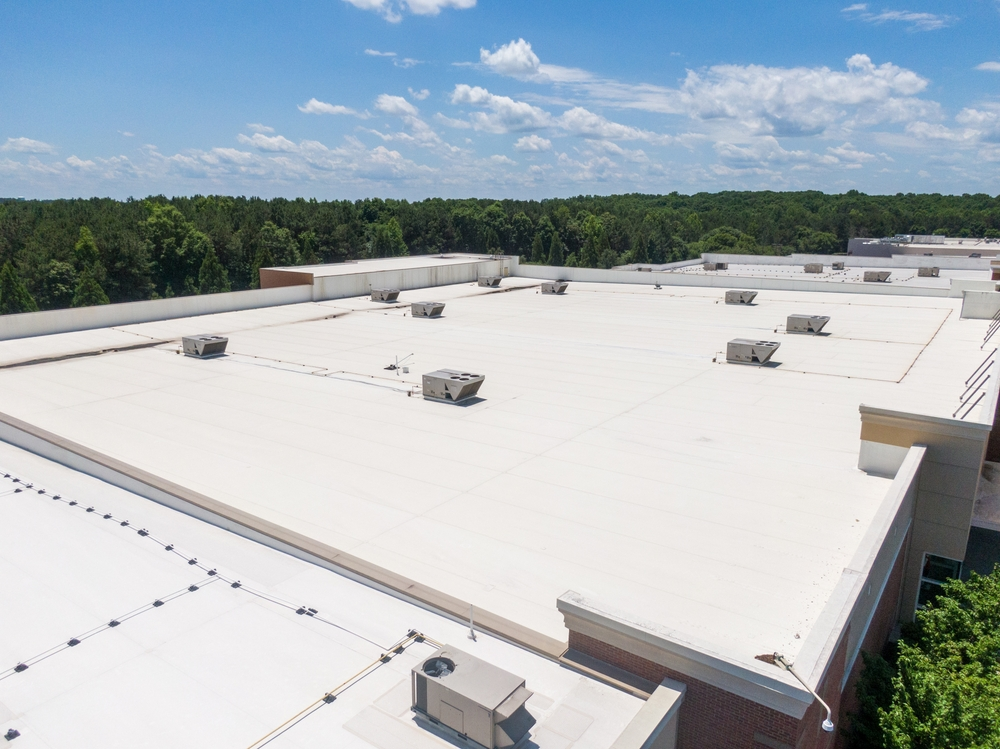
A commercial flat roof should usually be inspected at least once a year, with additional checks after storms, heavy rain or high winds. Larger commercial properties may benefit from more frequent inspections, especially if the roof has plant equipment, rooflights or drainage outlets.
Early warning signs include internal water stains, damp smells, bubbling roof surfaces, cracks, lifted edges, standing water and blocked outlets. You may also notice repeated leaks in the same part of the building after heavy rain.
Yes, many commercial flat roofs can be repaired if the damage is localised and the wider flat roofing system is still in reasonable condition. A proper inspection helps confirm whether a targeted repair is enough or whether the problem is part of a larger roof failure.
Small commercial flat roof repairs can often be completed fairly quickly once the issue has been assessed and safe access is arranged. Larger roof repairs may take longer if multiple areas are affected, the roof is difficult to access or weather conditions delay the work.
Leaks are often caused by failed seams, cracked coverings, damaged upstands, blocked drainage, punctures, ageing materials or movement around roof penetrations. On large scale commercial properties, water can travel before it appears inside, so the visible leak is not always directly below the fault.
Standing water can be a concern if it remains for long periods after rainfall. It can place extra stress on the roof, speed up material wear and make existing weak points more likely to leak.
This depends on access, safety and the type of commercial property. Good commercial roofing contractors should plan the repair service around the business where possible, especially if the work could affect staff, customers, stock, machinery or production areas.
It helps to share where the leak appears inside, when it happens, how long it has been present and whether the roof has had previous repairs. Photos, maintenance records and details of recent building work can also help the contractor assess the likely cause more efficiently.
Emergency roof repairs are often designed to stop immediate water ingress and protect the building quickly. A follow-up inspection is usually recommended so the underlying issue can be properly repaired and future leaks can be reduced.
A cost effective repair deals with the real cause of the problem rather than repeatedly patching symptoms. The best option is usually the one that protects the building, suits the condition of the roof and avoids unnecessary disruption or premature replacement.


Registered address: 31 Willingdon Road, Eastbourne, East Sussex BN21 1TN. Company Registration Number: 15706433.
VAT Registration number: 502034161