Need Help?
Have an emergency? We offer emergency call out & repair

Have an emergency? We offer emergency call out & repair
Roof repairs and re-roofing for older properties in Sussex need careful planning, particularly where traditional tiles, slate and timber roof structures are involved. From Victorian terraces and Sussex cottages to converted farmhouses and commercial premises, roofs that have stood for decades can develop problems that aren’t always obvious from the ground.
Clay tiles, natural slate, lead flashings and traditional chimney stacks are familiar features across East Sussex and West Sussex. Although the roof coverings themselves might have many years of life left, the nails, battens and timber beneath them can tell a different story.
So, when is a repair enough, and when does replacing the roof become the better investment?
TL;DR: Many older roofs can be repaired without replacing the entire covering. Slipped tiles, damaged flashing and isolated leaks are usually repairable, provided the surrounding roof remains sound. Repeated leaks, failing fixings and widespread damage can make re-roofing more economical. Listed buildings may also need additional permissions before work begins.
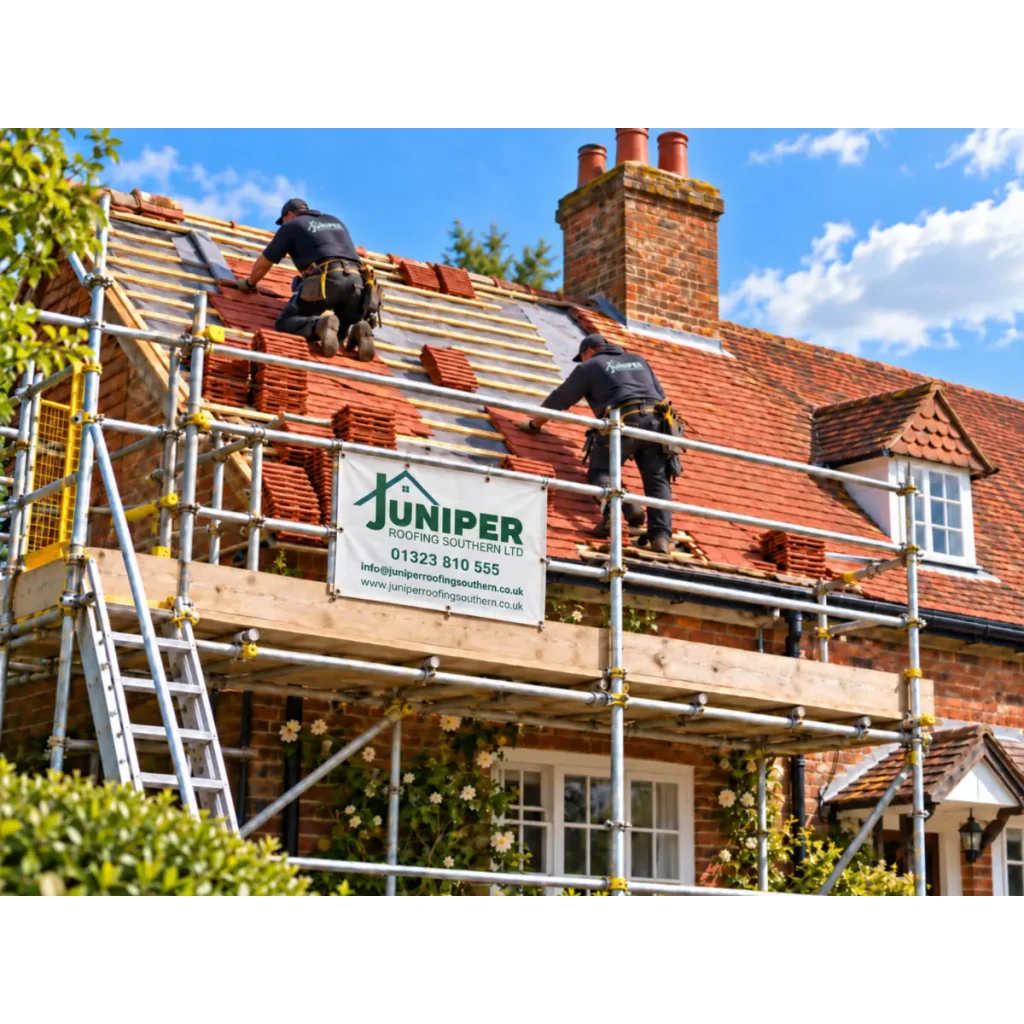
Many older Sussex properties have traditional clay tiled roofs. Natural slate became more widely used during the nineteenth century, as expanding railway networks made it easier to transport Welsh slate into the region.
Both materials have impressive lifespans, but the parts holding them in place don’t necessarily last as long.
For example, a Victorian slate roof might still have sound slates, but the original nails could be badly corroded. Similarly, clay tiles might remain intact while the wooden battens beneath them have started to rot.
Previous repairs also matter. Poorly matched tiles, unsuitable fixings or badly installed flashing can create problems that weren’t there before.
Historic England advises checking whether an older roof can be repaired before deciding to replace it, particularly when original materials contribute to the building’s historic character.
A slipped tile doesn’t necessarily mean the tile itself has failed. Corroded nails, decaying battens and worn wooden pegs are recognised causes of movement in traditional tiled roofs, according to the Society for the Protection of Ancient Buildings (SPAB).
A couple of storm-damaged tiles might be straightforward to replace. However, when tiles keep slipping in different places, the problem could lie beneath the covering.
Natural slate is found on many Victorian and Edwardian houses, often remaining serviceable long after the original fixings have deteriorated.
One common problem is ‘nail sickness’. This happens when the nails securing the slates corrode, eventually allowing them to slip.
The good news is that sound slates don’t necessarily have to be thrown away. Some can be salvaged and reused, depending on their age, thickness and physical condition.
Lead flashing forms a weatherproof barrier around chimneys, roof valleys and adjoining walls. Once it splits, lifts or works loose, rainwater can find its way into the building.
Older chimneys bring other problems. Crumbling mortar, defective pointing and loose ridge tiles leave exposed joints where water can enter.
Finding the source isn’t always straightforward. Water can run along timber before appearing as a damp patch on a bedroom ceiling, some distance from the actual leak.
Repairing the flashing, mortar or damaged tiles can resolve the problem without disturbing the rest of the roof.
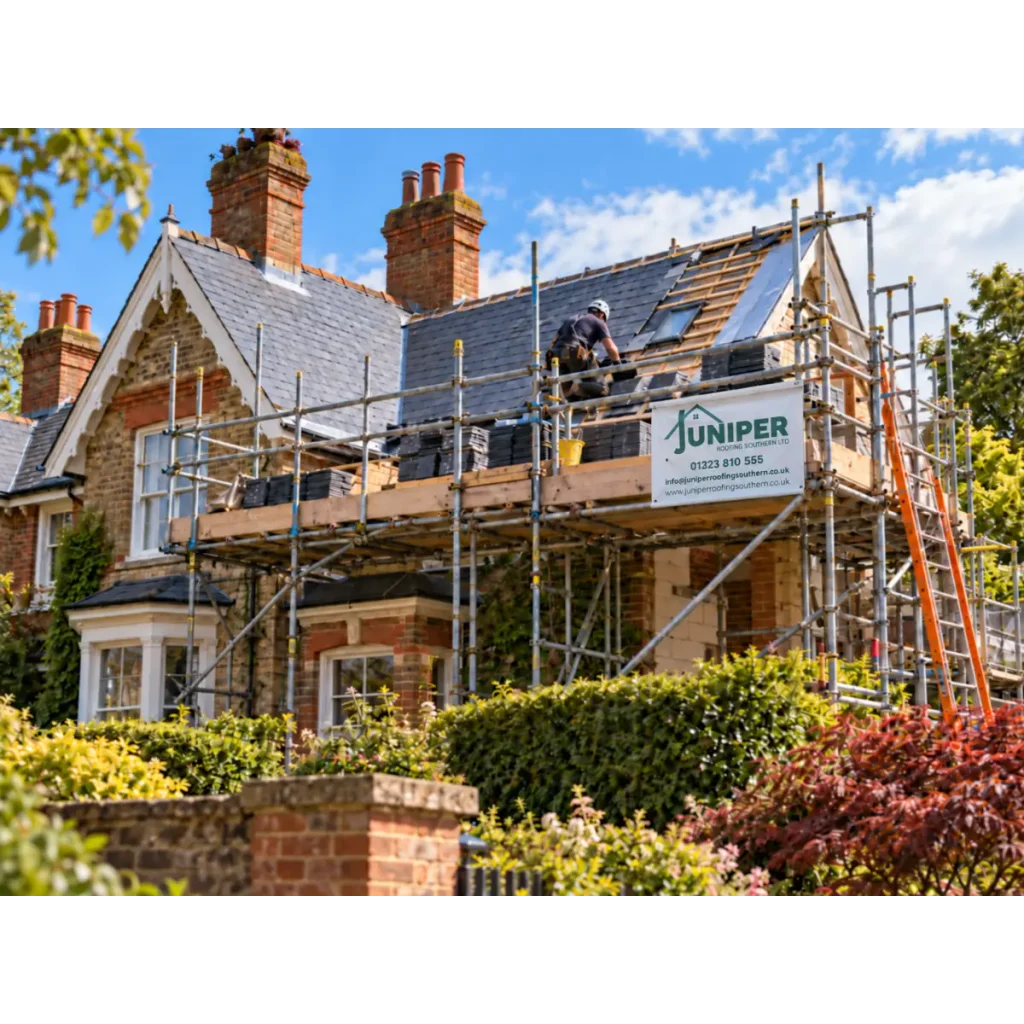
If most of the roof is sound, there’s little reason to replace it because of one damaged area.
A few missing tiles after a storm, defective lead flashing, or a leak around a chimney can usually be dealt with through targeted repairs.
Re-roofing becomes a different proposition when problems keep returning.
Imagine paying for chimney repairs one year, replacement tiles the next and further leak repairs after another winter. Although each job fixes a separate problem, the overall roof may be reaching a point where continuing to patch it becomes expensive.
A complete re-roof costs more initially, but where deterioration is widespread, it can provide a more reliable long-term answer.
Before making that commitment, we need to establish what’s failing and how much of the existing roof can realistically be retained.
Anyone who has seen a patch of bright new tiles against weathered originals will know how noticeable an unsuitable repair can be.
Older handmade clay tiles frequently have variations in texture, size and colour. Modern machine-made replacements don’t always blend with them, even when the advertised colour looks similar.
Natural slate presents its own challenges. Thickness, dimensions and the way individual slates overlap all affect how the roof performs.
Matching the appearance matters, but so does using the correct material for the structure.
For example, replacing natural slate with substantially heavier concrete tiles places additional weight on the roof. Older rafters might not have been designed to support that load, so a structural assessment could be needed.
Where existing tiles or slates remain sound, retaining them avoids unnecessary replacement and helps keep the character of the property.
Listed buildings have additional protection because of their architectural or historic importance. Roofing alterations that affect their special character require listed building consent.
According to Historic England, minor like-for-like repairs don’t necessarily need consent. However, replacing traditional roof coverings with different materials, altering the roof structure or changing historic details could require approval.
Being in a conservation area can also affect what changes are permitted, particularly where planning controls apply.
Before arranging work on a listed property, we will check the requirements with your local planning authority or conservation officer.
Roof repairs for older commercial buildings
A leaking roof on a house is inconvenient. In a commercial property, the consequences can include damaged stock, electrical equipment, lost working time, and customer disruption, which we know can be disastrous for a business, so we respond quickly and can help you swiftly.
Older offices, shops, restaurants and converted industrial premises sometimes have particularly complicated roof layouts.
A building that has been extended several times, for example, might have different roof coverings and junctions between original structures and newer additions. These meeting points can become troublesome if flashings or drainage details fail.
For landlords and facilities managers, roof maintenance should form part of the building’s wider maintenance schedule.
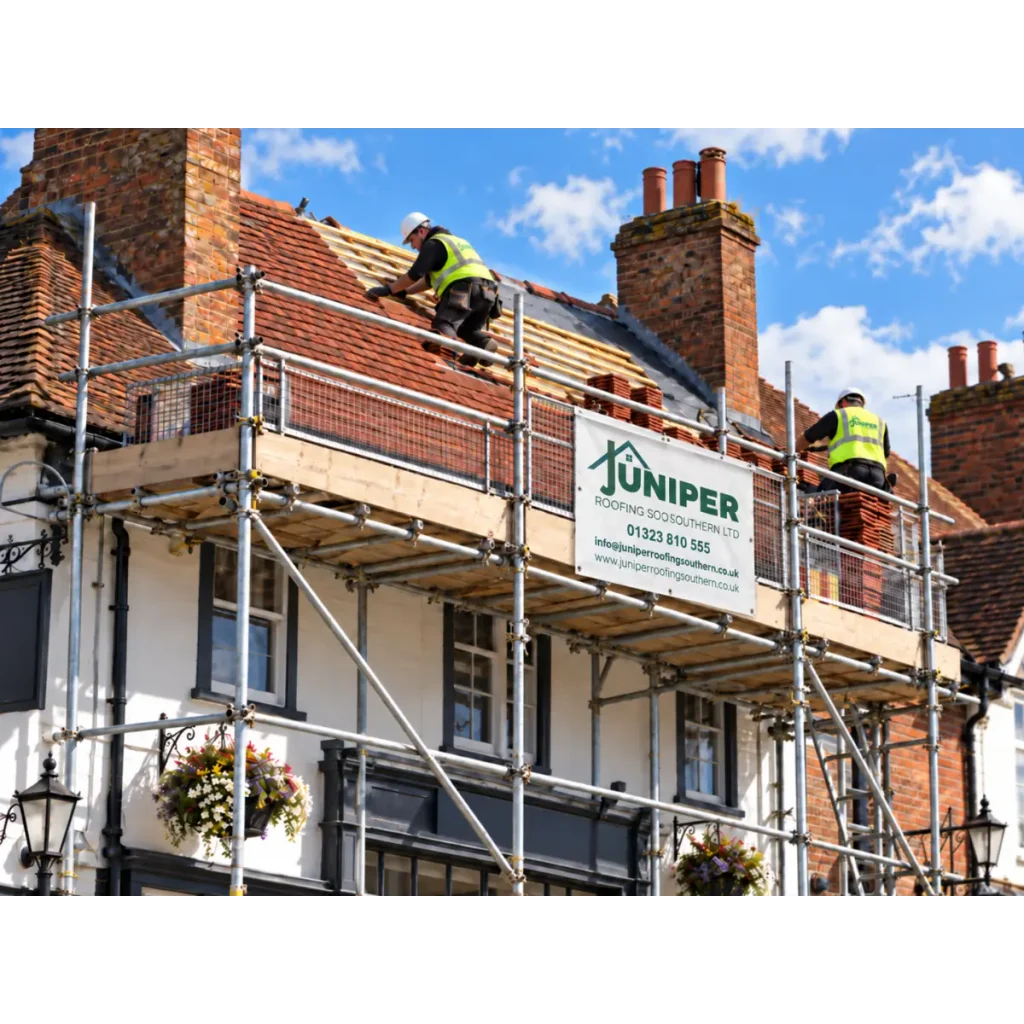
It’s also worth considering how repairs will affect the people using the premises. Scaffold positions, deliveries, customer entrances and safe access all need planning, especially when the business intends to remain open throughout the work. We provide all the planning and will discuss with you, in detail, the best way forward to ensure your business is not impacted negatively.
If a substantial section of roofing is being replaced, it’s worth checking whether the insulation needs upgrading at the same time.
However, what works on a modern house isn’t automatically right for a Victorian or Edwardian property.
Traditional roof constructions deal with moisture differently from many newer systems. Installing insulation without considering ventilation and moisture movement can create condensation problems, potentially damaging timber that has remained sound for decades.
Re-roofing can also trigger Building Regulations requirements for thermal improvements.
The Planning Portal explains when re-roofing work is subject to Building Regulations, including requirements concerning energy efficiency and structural safety.
For older properties, the roof’s construction needs to be understood before deciding what improvements to make, and we guide you through this process, from start to finish.
You don’t need to climb onto a roof to spot many of the early warning signs.
SPAB recommends checking traditional roofs twice a year, with spring and autumn being useful times to look for damage.
From a safe position at ground level, check for:
It’s also sensible to check for visible damage after strong winds or prolonged heavy rain.
Don’t attempt to access the roof yourself. If something looks wrong, Juniper Roofing Southern can investigate safely and establish what needs repairing.
The expense of replacing a few damaged tiles is generally far less than dealing with rotten timber, damaged plaster or a ceiling affected by a leak that has been ignored.
With over 25 years of roofing experience, Juniper Roofing Southern works on domestic and commercial properties throughout East Sussex, West Sussex and surrounding areas.
Our services include roof repairs and maintenance, leadwork, chimney repairs, complete re-roofing, and all other roofing-related services.
If you’re dealing with recurring leaks, damaged tiles or concerns about an ageing roof, we’ll inspect the problem, explain what work is needed and provide a clear quotation.
Need advice about an older roof?
Call 01323 810 555 or contact Juniper Roofing Southern online to arrange an appointment.
You may also find our article Spray Foam Insulation Mortgage Problems: Could a New Roof Restore Your Property’s Value? useful.
Yes. Age alone isn’t a reason to replace a roof. Many traditional slate and clay tiled roofs remain repairable after 100 years, particularly when the supporting timbers are sound.
For isolated damage, repairs usually cost less. If several sections are failing and repair bills keep mounting, a complete re-roof could prove more economical over the longer term.
Yes, if they’re sound and suitable for reuse. Traditional clay tiles and natural slates are sometimes salvaged during roofing work rather than discarded.
Damaged lead flashing, cracked mortar, defective pointing and displaced tiles are common causes. Water entering near a chimney can also travel before appearing inside the building.
Not always. Many straightforward re-roofing projects don’t need planning permission, but listed buildings, conservation area restrictions and alterations to the roof’s appearance can change the requirements. Building Regulations approval is a separate consideration.
Yes, in many cases. It depends on the work, access arrangements and whether staff and customers can use the premises safely.
When tiles, fixings or battens are failing across large areas, or repeated repairs no longer resolve the leaks, replacing the covering could be the better option. The supporting structure must also be checked before work begins.


Registered address: 31 Willingdon Road, Eastbourne, East Sussex BN21 1TN. Company Registration Number: 15706433.
VAT Registration number: 502034161