Need Help?
Have an emergency? We offer emergency call out & repair

Have an emergency? We offer emergency call out & repair
Somewhat unsurprisingly, the cause of a necessary emergency roof repair often doesn’t give you much warning. Else, it probably wouldn’t be such an emergency! One strong gust, a night of heavy rain or a tile that has finally reached the end of its life can turn a small weakness into an active leak.
When that happens, the priority is not to start climbing onto the roof yourself. A proper emergency roof repair is about making the property safe, limiting further water damage and identifying exactly what has failed before a permanent repair begins.
At Juniper Roofing Southern, we provide emergency call-outs and pitched roof repairs across East Sussex for homes affected by leaks, missing tiles, failed leadwork and storm damage.
If water is entering your home, slates or tiles have come loose, part of the roof has visibly moved or recent weather has caused sudden damage, treat the problem urgently. Keep away from the damaged area, protect belongings indoors where safe, document visible damage and contact a roofing contractor who can assess the roof properly and carry out any necessary emergency roof repair works.
Not every roofing problem needs an immediate call-out or requires an emergency roof repair, but some issues should not be left.
An active roof leak is an obvious example. The same applies if slates or tiles are hanging loose, ridge or verge sections have become unstable, flashing has lifted around a chimney or storm damage has left part of the roof exposed.
The visible damage may only be the start. Water can travel beneath roof coverings before appearing indoors, affecting insulation, ceilings, battens and timber along the way.
This is why our roof repairs and maintenance work starts with finding the actual source of the problem, whether it turns out to be a small localised fault or something that needs more urgent attention.
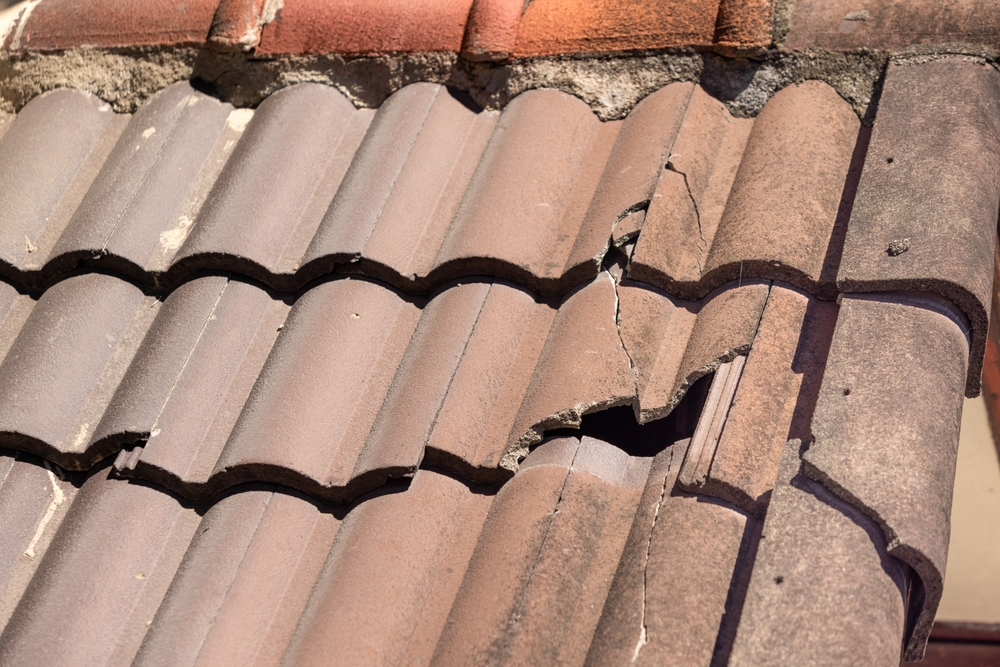
Pitched roofs rely on several components working together. Roof tiles, slates, underlay, battens, ridge details, valleys, leadwork and fixings all play a role.
Strong wind can lift or displace individual tiles. Driving rain can then enter through the exposed area, while weakened mortar or flashing may fail at the same time.
That is why pitched roof repairs should begin with an assessment rather than simply replacing the first missing tile we can see. A leak inside the property is not always directly beneath the place where water entered, something we also cover when looking at common causes of pitched roof leaks.
Before particularly bad weather arrives, it is also worth keeping an eye on Met Office weather warnings. Strong wind and heavy rain can quickly expose weaknesses that may have gone unnoticed during calmer conditions. Being alert to the surroundings and prepared beforehand can help reduce the necessity of an emergency roof repair further down the line.
The safest first step is usually to stay off the roof before any emergency roof repair takes place.
Even a small emergency roof repair can become dangerous when tiles are wet, damaged or unstable. The Health and Safety Executive classes roof work as a high-risk activity, requiring proper access, planning and safety precautions.
Inside, move furniture, electrical items and valuables away from an active leak where it is safe to do so. A container can catch dripping water, but if water is near electrical fittings, avoid touching the affected area.
It is also worth taking photographs of visible internal damage and, from ground level, any obvious damage you can safely see outside. This can help us understand what has happened before attending and may also be useful if an insurance claim becomes necessary. The Association of British Insurers recommends keeping photographs and records of storm damage along with invoices for emergency work.
An emergency roof repair visit does not automatically mean a new roof, most often far from it.
In many cases, the right answer is a targeted roofing repair service. That might involve replacing damaged roof tiles, repairing flashing, securing ridge details or dealing with another localised point of failure.
Where weather conditions prevent a full repair immediately, temporary protection may be required first to reduce further water ingress until permanent work can be completed safely.
Sometimes, however, storm damage reveals a larger underlying issue. Rotting timber, movement in the roof structure or widespread deterioration may mean repair and replacement need to be considered together.
For more substantial works, Building Regulations can also become relevant. The Planning Portal explains how the regulations apply to work on an existing roof, particularly where larger sections are replaced or structural changes are involved.
It’s important to know that an emergency roof repair and being ‘fast’ does not have to mean rushed.
When we attend an urgent roofing problem, the aim is to establish what happened, what needs making safe and what repair will actually solve the issue. Good photographic evidence gives you a clear record of the roof condition rather than relying on a vague explanation from ground level.
That matters whether the solution is one replacement tile or more substantial pitched roof repairs. It helps prevent a visible symptom being patched while the actual source of the roofing problem remains.
If you have a leaking or damaged roof in East Sussex, including Peacehaven and the surrounding areas, Juniper Roofing Southern can assess the problem and advise on the most appropriate next step and whether an emergency roof repair is required.
From storm damaged tiles and urgent leaks to more serious structural issues, our approach is to identify the cause, document what we find and explain the repair required clearly.
If you found this interesting, you may also like our guides to pitched roof leaks and repairs and roof repairs and maintenance.
Move anything valuable away from the affected area and use a bucket or container to catch water where it is safe to do so. Avoid climbing onto the roof yourself, especially during bad weather, and contact an emergency roofer to assess the cause.
Not always, but it can become one quite quickly. A missing tile can leave the layers beneath exposed to wind and rain, so it is worth having it checked before water begins finding its way into the property.
That depends on the weather, the type of damage and whether the roof can be accessed safely. In very poor conditions, an emergency roofer may need to make the area temporarily secure before returning to complete the permanent repair.
The damp patch you can see indoors is not necessarily directly underneath the point where water entered. Water can travel along rafters, underlay and other parts of the roof structure, which is why pitched roof repairs usually involve tracing the leak rather than simply working above the visible stain.
Yes. High winds can loosen fixings, lift tiles slightly, disturb ridge sections or damage flashing without anything obviously falling from the roof. Problems sometimes only become noticeable when the next spell of heavy rain arrives, leaving you with an emergency roof repair situation.
If your roof has been storm damaged, it is sensible to check your insurance policy and contact your insurer where appropriate. You should not, however, leave an unsafe or actively leaking roof untreated simply while waiting for an insurance decision.
Water can begin affecting insulation, ceilings and timber relatively quickly if it continues entering the roof space. The longer a leak is left, the greater the chance that a relatively straightforward roofing repair develops into more extensive work.
A cracked tile may continue shedding some rainwater, but it is still a weakness in the roof covering. If the crack worsens, frost gets into it or strong winds move the tile, the risk of water ingress increases, so it is best dealt with before that happens.
Yes. Sometimes the safest option is to protect the damaged area temporarily and carry out the full repair once weather conditions improve. A temporary repair should still be followed up properly rather than being treated as a permanent solution.
Yes, Juniper Roofing Southern carries out roofing work across East Sussex, including Peacehaven and surrounding areas. If you have storm damage, a sudden leak or another urgent roofing problem, we can assess what has happened and recommend the appropriate repair.


Registered address: 31 Willingdon Road, Eastbourne, East Sussex BN21 1TN. Company Registration Number: 15706433.
VAT Registration number: 502034161